

Training Standards
How You Practice Is How You Play
One of the most important ideas in soccer — and in life — is simple:
When we get together we act like professional soccer players. That is our mentality.
How you practice is how you play.
Training is not something we do just to get through the week. It is where habits are built. Every touch, every run, every challenge, and every decision you make in practice is shaping the kind of player you become.
Players sometimes think that they can “turn it on” during games. In reality, that almost never happens.
You play the way you train. Same in life.
A Personal Standard
When I play soccer, I never lower my level.
Sometimes people might think that when I play with kids I coach I’m enjoying beating up on them. Do I enjoy tormenting weaker players or dominating a game? Honestly, yes — part of playing sports is enjoying competition and playing well.
But that’s not the real reason.
The real reason is that I have set a standard for myself, and I refuse to drop it.
Dropping your standard becomes a habit. Raising your standard every time becomes a better habit.
And in sports, habits are everything.
Do You Want More Playing Time?
When it comes time to select players for JV games, I’m not only looking at performances in matches. I’m watching training.
The players who raise their level in practice are the ones who stand out. The players who drop their level during training are not the players coaches rely on when games matter.
Training is where trust is built.
Coach’s message
How you practice is how you play.
Every rep, every run, every decision in training is building the player you become on match day. You cannot coast through practice and “turn it on” in games. The habits you build here are the ones that show up out there — every single time.
Our identity
The Game Plan
Not just a formation — an attitude. Learn it, own it, and bring it every time you play.
01
Our Identity
Hard-working, organized, and brave on the ball. Eleven players acting as one unit — non-negotiable.
02
Our Shape
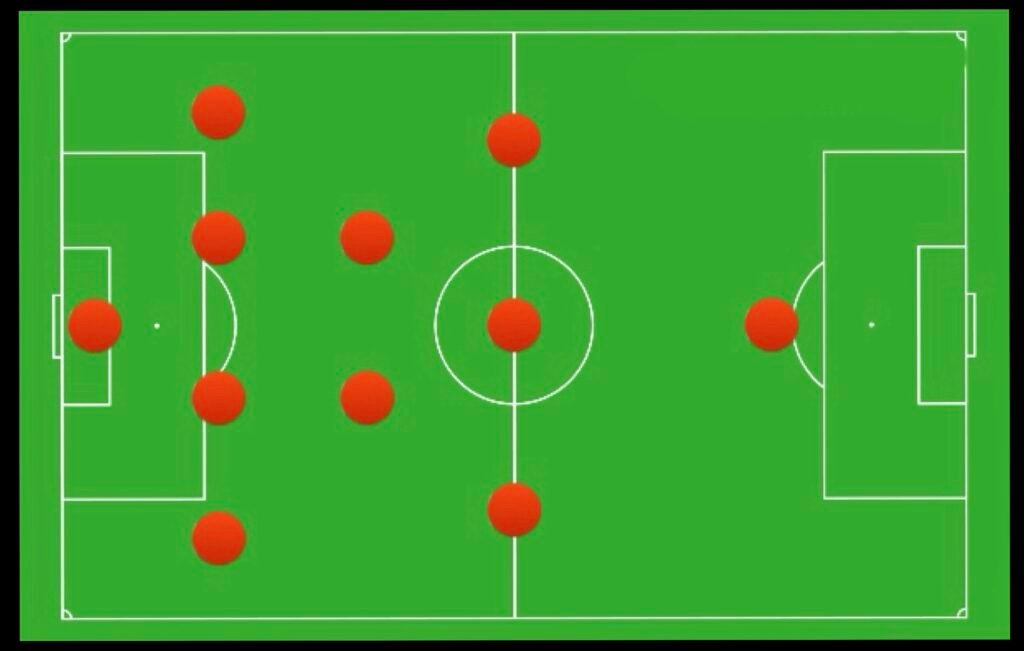
4-2-3-1. Built for balance — hard to score against, dangerous going forward.
03
Our Mentality
Talk loud. Play with intensity. Never drop your standard — not in training, not in games.
Formation
The 4-2-3-1 Breakdown
Know your position. Know your job. If you understand your role, you make everyone around you better.
| Back 4 | Keep it tight, clear danger, and build from the back when there is time and space to do it safely. |
| Holding Mids | The engine room. Win the ball, protect the defense, and keep us moving in possession. |
| Attacking 3 | Create chances, stretch the defense wide, and always support the striker’s runs. |
| Striker | Link play, hold the ball up, and finish your chances. Your work off the ball matters as much as your goals. |
Why we use it
- Two mids shield the back line — hard to play through us
- Fast transitions work in both directions
- Can shift to a 4-5-1 when we need to protect a lead
Team standards
Our Standards
Every moment of the game has a job attached to it. Know yours — and do it every time, not just when it is easy.
In possession
When We Have the Ball
- Pass and move immediately — do not stand and watch.
- Stay wide to stretch their shape.
- Play forward whenever the option is on.
Transition
When We Lose It
- React instantly. Head up, not down.
- Sprint back into your shape.
- Counter-press together if the ball is close.
Out of possession
When They Have It
- Stay compact. No gaps through the middle.
- Force them wide — deny the easy central pass.
- Track every single runner. Every one.
Watch
Film Session
Quick Check
Score: 0 / 0Question 1
Loading…
Finished